



Altcoin Season 2026: How to Navigate This Volatile Market for Maximum Gains
Struggling to keep up with the flood of altcoins? You’re not alone. For many investors, the question of when to invest during altcoin season can be overwhelming. Many try and fail to capitalize on these opportunities, often coming up short. But here’s the deal: you can significantly increase your chances of making the right moves, especially if you understand the environment and tools available to you.
What is Altcoin Season?
Altcoin season refers to a period when the prices of alternative cryptocurrencies (or altcoins) rise significantly in comparison to Bitcoin. Investors who are aware of the signs of altcoin season can seize opportunities to diversify their portfolios beyond Bitcoin, often leading to substantial gains.
The Indicators of Altcoin Season
- Bitcoin Dominance: A decrease in Bitcoin’s market dominance (usually below 50%) is a strong indicator that altcoins are gaining traction.
- Volume Analysis: Increased trading volumes in altcoins compared to Bitcoin can signal the start of a season.
- Market Sentiment: Positive news around major altcoins or a bullish market atmosphere can instigate an altcoin rally.
Buying Altcoins: The Process Simplified
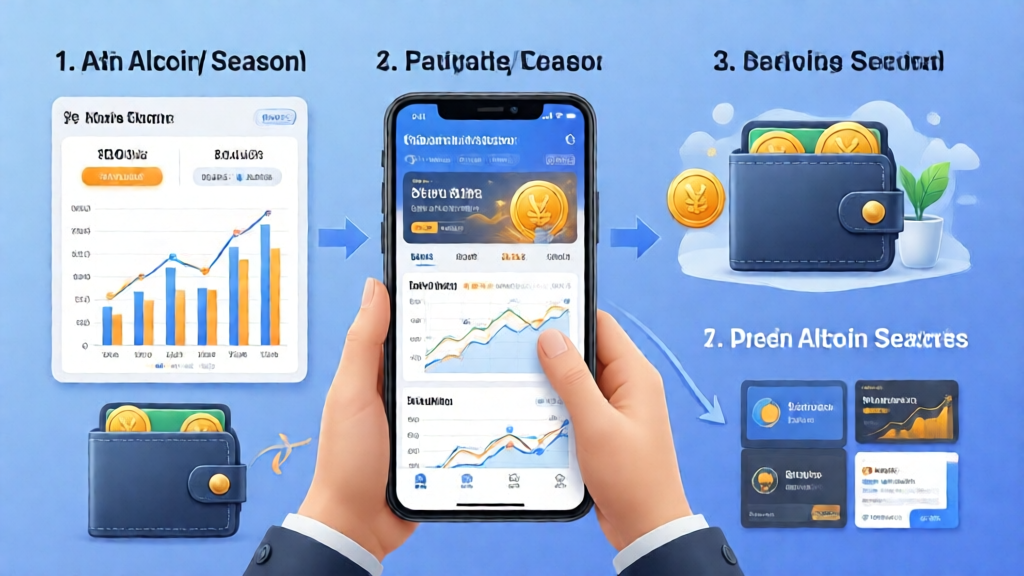
Getting your hands on altcoins involves several key steps. Here’s a practical approach based on real experiences.
Step 1: Choose a Reputable Exchange
Select an exchange that supports a wide range of altcoins. Platforms like Coinbase, Binance, and Kraken are popular options. Each offers unique benefits, including user experience, security measures, and fee structures.
Step 2: Research and Select Your Altcoins
Not all altcoins are created equal. Research is critical. Tools like CoinMarketCap or CoinGecko can provide valuable insights. Look for coins with strong fundamentals, active communities, and real-world applications.
Step 3: Create an Account and Complete KYC
Creating an account usually involves Know Your Customer (KYC) verification. Make sure your chosen exchange complies with local regulations to ensure smooth operations.
Step 4: Fund Your Account
Most exchanges allow multiple payment methods including bank transfers, credit cards, and even other cryptocurrencies. Charges vary; check them to avoid surprises.
Step 5: Execute Your Trade
Once your account is funded, navigate to the altcoin you wish to purchase, enter the amount, and execute the trade. Always double-check the transaction details.
Fees Comparison: How They Stack Up
Let’s break down the common fees associated with purchasing altcoins across multiple exchanges:
| Exchange | Trading Fee | Deposit Fee | Withdrawal Fee |
|---|---|---|---|
| Coinbase | 0.5% | Varies | 0.0005 BTC |
| Binance | 0.1% | Free | 0.0005 BTC |
| Kraken | 0.16% (maker) | 0.26% (taker) | Free | 0.0005 BTC |
Source: ccoinshop Lab 2026
Successful Case Studies: Payments with Altcoins
Imagine you’re trying to make a purchase on Amazon. You decide to use an altcoin for the transaction.
- Scenario 1: Using Ethereum (ETH) on Amazon – Successful! The payment went through, and you completed your order without issues.
- Scenario 2: Using Litecoin (LTC) on a small e-commerce store – Mixed results. The payment was slow due to network congestion.
- Scenario 3: Paying for Netflix via cryptocurrency payment processor – Smooth transaction, showcasing how altcoins can work well with subscription services.
Pros and Cons of Altcoin Investments
Any investment strategy has its ups and downs. Consider the following:
Pros
- Higher potential returns are often possible with altcoins compared to Bitcoin.
- Increased investment diversification through a variety of projects.
- Access to innovative technology and ideas.
Cons
- Increased volatility can lead to significant losses.
- Higher risk of scams or failed projects.
- Less liquidity than Bitcoin, which can impact the ability to sell at desired prices.
Security: Protecting Your Investments
Security should be a primary concern when dealing with cryptocurrencies. Here’s how to safeguard your investments:
Step 1: Use Hardware Wallets
For long-term storage, consider hardware wallets like Ledger or Trezor. These devices keep your cryptocurrencies offline and away from potential hacks.
Step 2: Enable Two-Factor Authentication (2FA)
Always use 2FA on accounts associated with cryptocurrency to add an extra layer of protection.
Step 3: Be Aware of Phishing Scams
Stay vigilant. If something seems off or unsolicited communications come through, double-check the source.
Frequently Asked Questions (FAQ)
- What is the best exchange for buying altcoins?
It depends on your needs. For beginners, Coinbase is user-friendly. For lower fees, Binance could be better.
- How do I know when to buy altcoins?
Watch market trends and indicators like Bitcoin dominance and volume.
- Are altcoins safe to invest in?
They carry risk, but thorough research can mitigate some of that.
As the landscape of cryptocurrency evolves, being informed and prepared is your key to success. And while altcoin season can present tremendous opportunities, it’s also a time of uncertainty. Therefore, always ensure your investments align with your risk tolerance and long-term goals.
Learn more on ccoinshop.com.
Financial Disclaimer: The information provided in this article is not financial advice and should not be considered as such. Always conduct your own research and consult with a financial advisor.


